Peak or Peek: Homophones Explained

Peak and peek are both correct English words, but they have completely different meanings. Peak refers to the highest point, ...
Read more
Seems vs Seams: Homophones Explained (Meaning & Spelling)
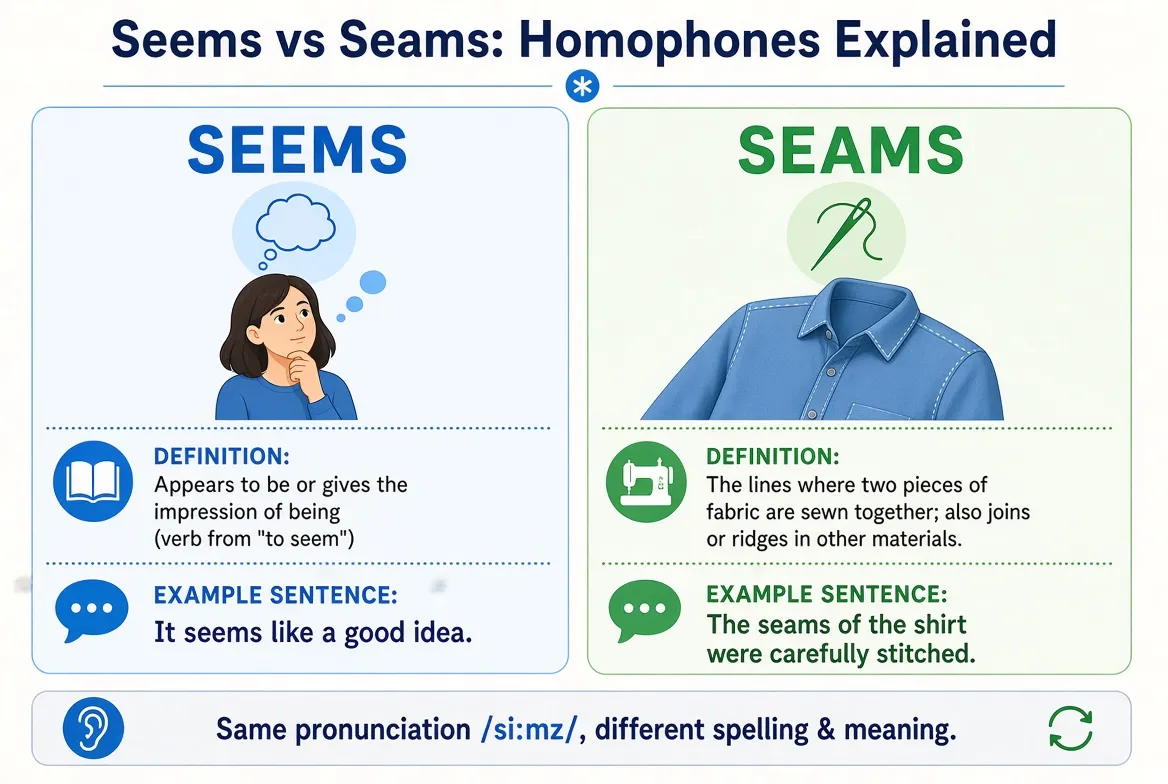
Seems means appears to be or gives the impression of something while Seams are Lines where two pieces of fabric ...
Read more
Paster or Pastor: Homophones Explained

Pastor: A religious leader who guides and serves a Christian congregation. Paster: A person, machine, or tool that applies paste ...
Read more
Wasted vs Waisted: Homophones Explained (Meaning & Spelling)
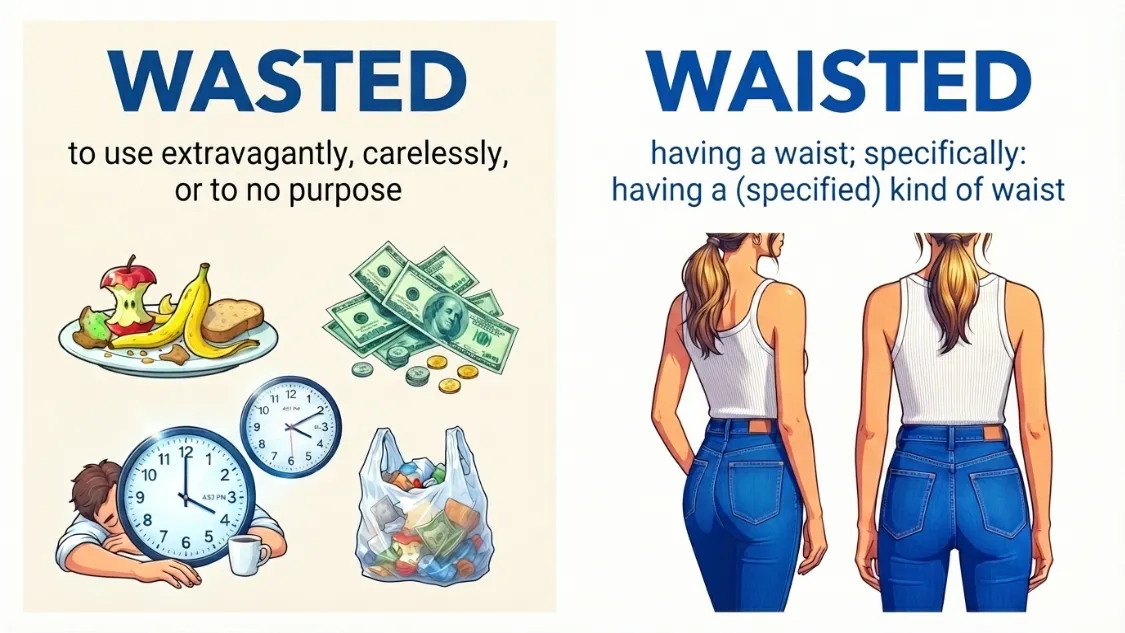
Wasted means used, spent, or consumed carelessly, without achieving a useful result while Waisted means relating to the waist or ...
Read more
“Pedal” or “Peddle”: Homophones Explained
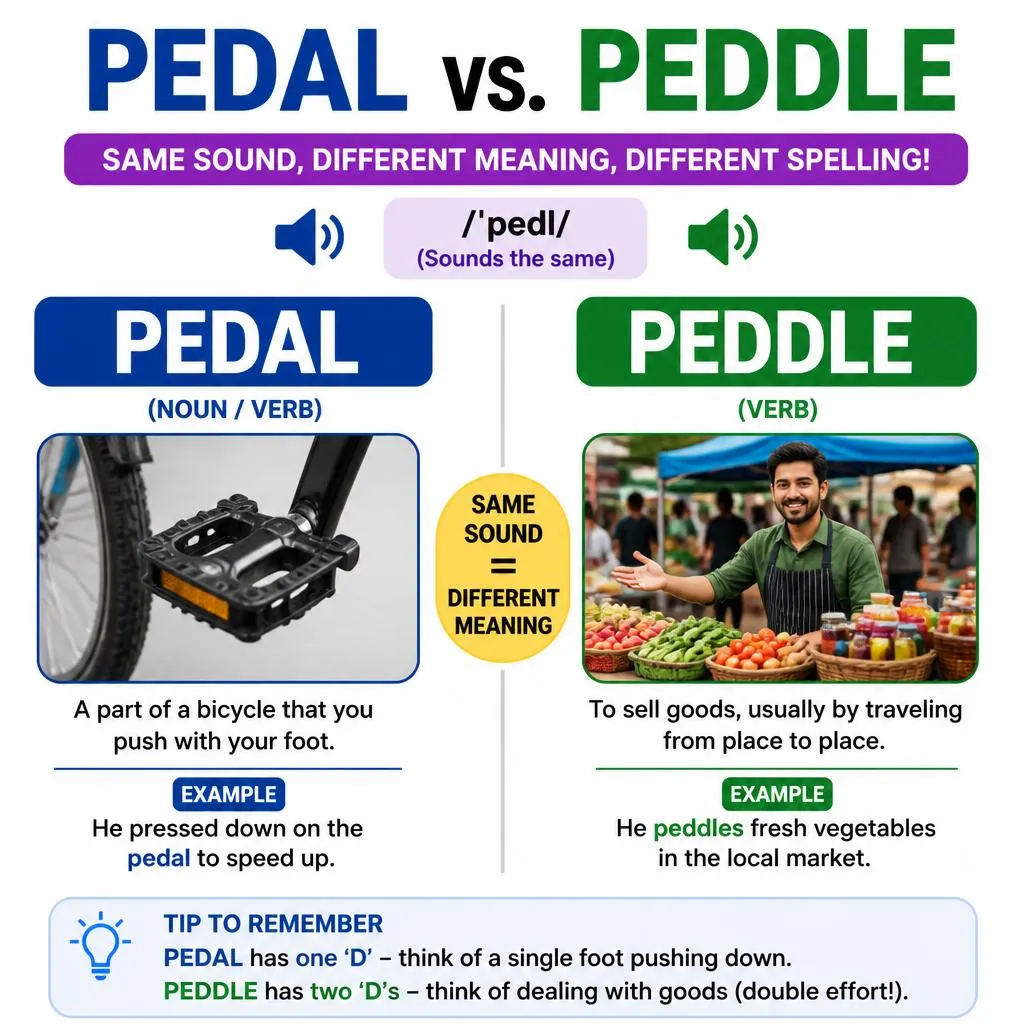
Pedal means a part of a bicycle, vehicle, or machine that you push with your foot, or the action of ...
Read more
“Waive” vs “Wave”: Homophones Explained (Meaning & Spelling)
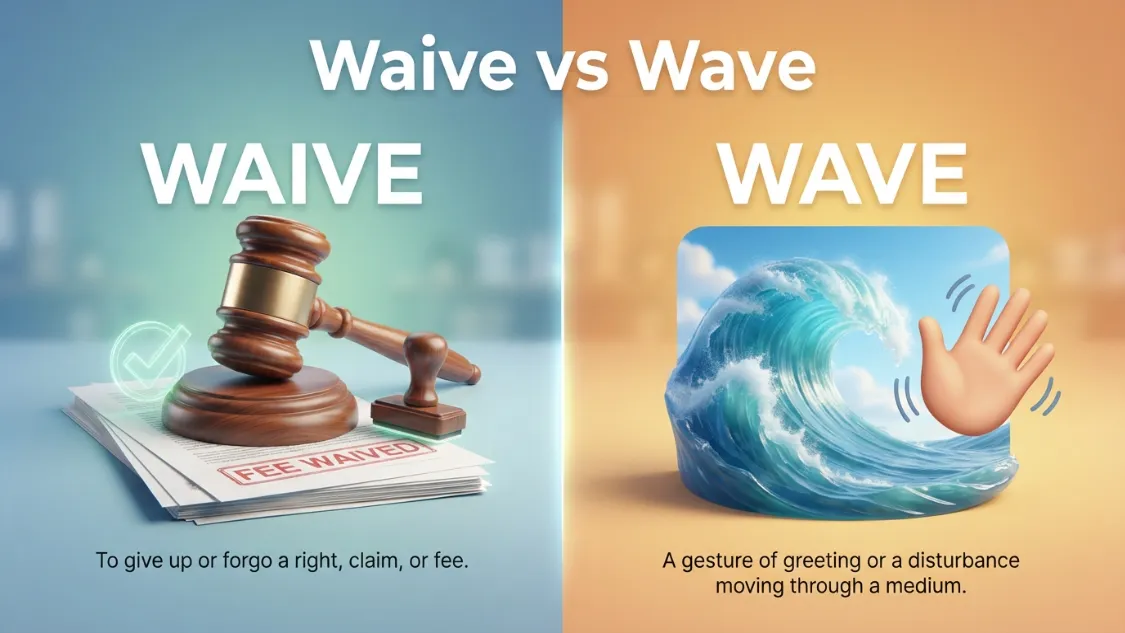
Waive means to voluntarily give up or cancel a right, fee, rule, or requirement, while wave means to move from ...
Read more
Summery or Summary: Homophones Explained
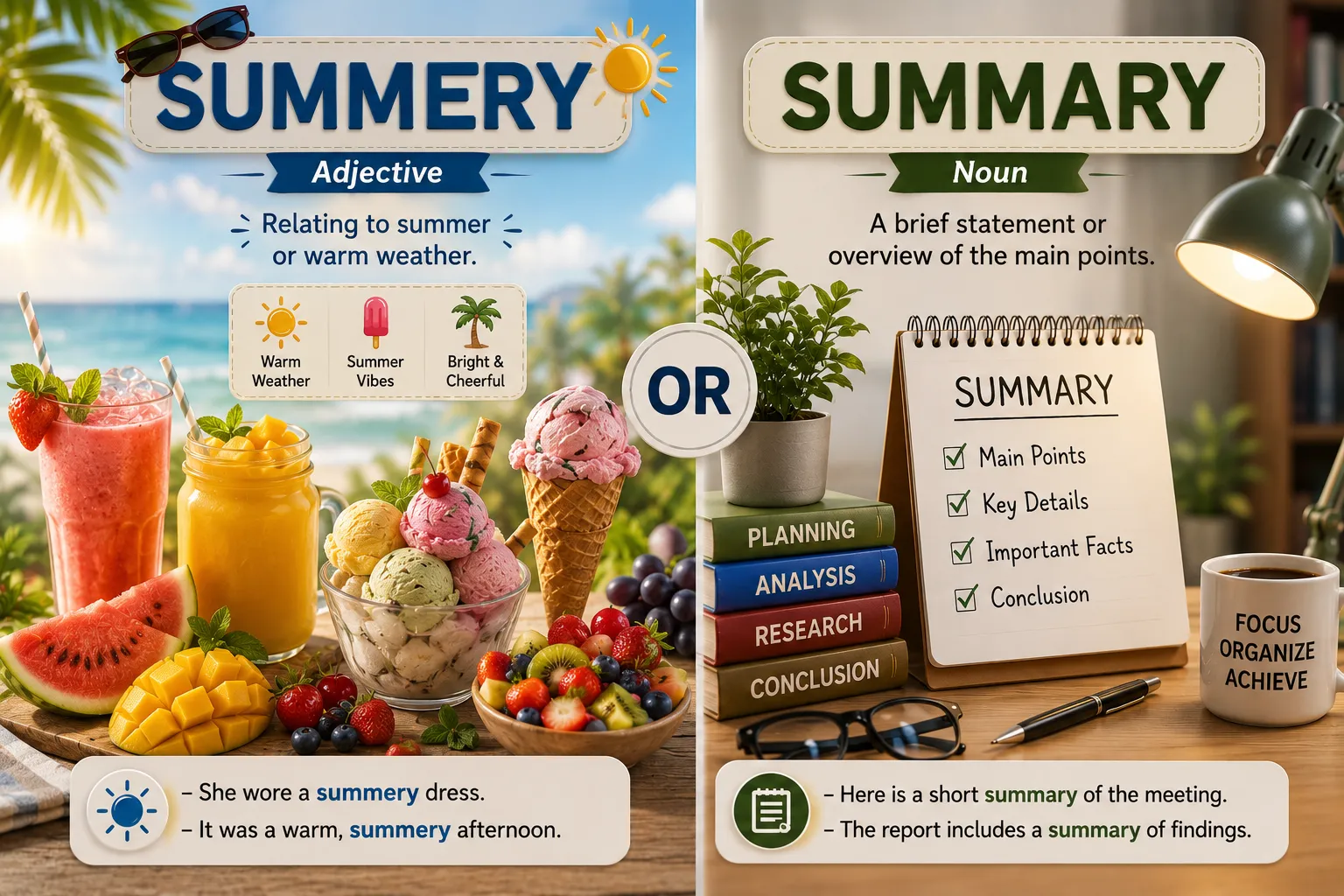
Summery: relating to summer or characteristic of warm, sunny weather. Summary: a brief statement that gives the main points or ...
Read more
Chord vs. Cord: Homophones Explained
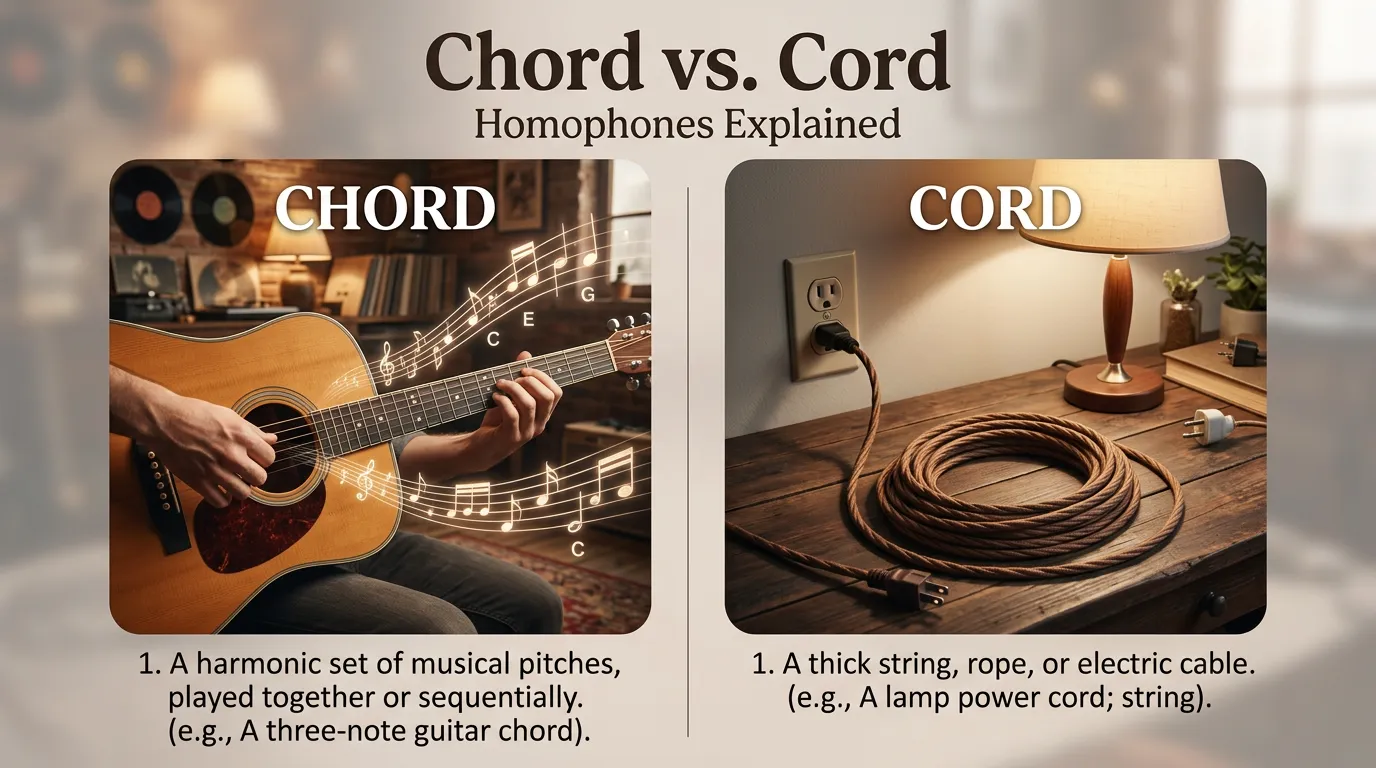
Chord: Two or more musical notes played together, or something that creates an emotional response. Cord means rope, string, cable, ...
Read more
Baring or Barring: Homophones Explained Meaning& Examples

Baring or Barring: “Baring” means revealing or uncovering something, while “barring” means except for or preventing something from happening. Quick ...
Read more
Whack or Wack: Are Both Spellings Correct?
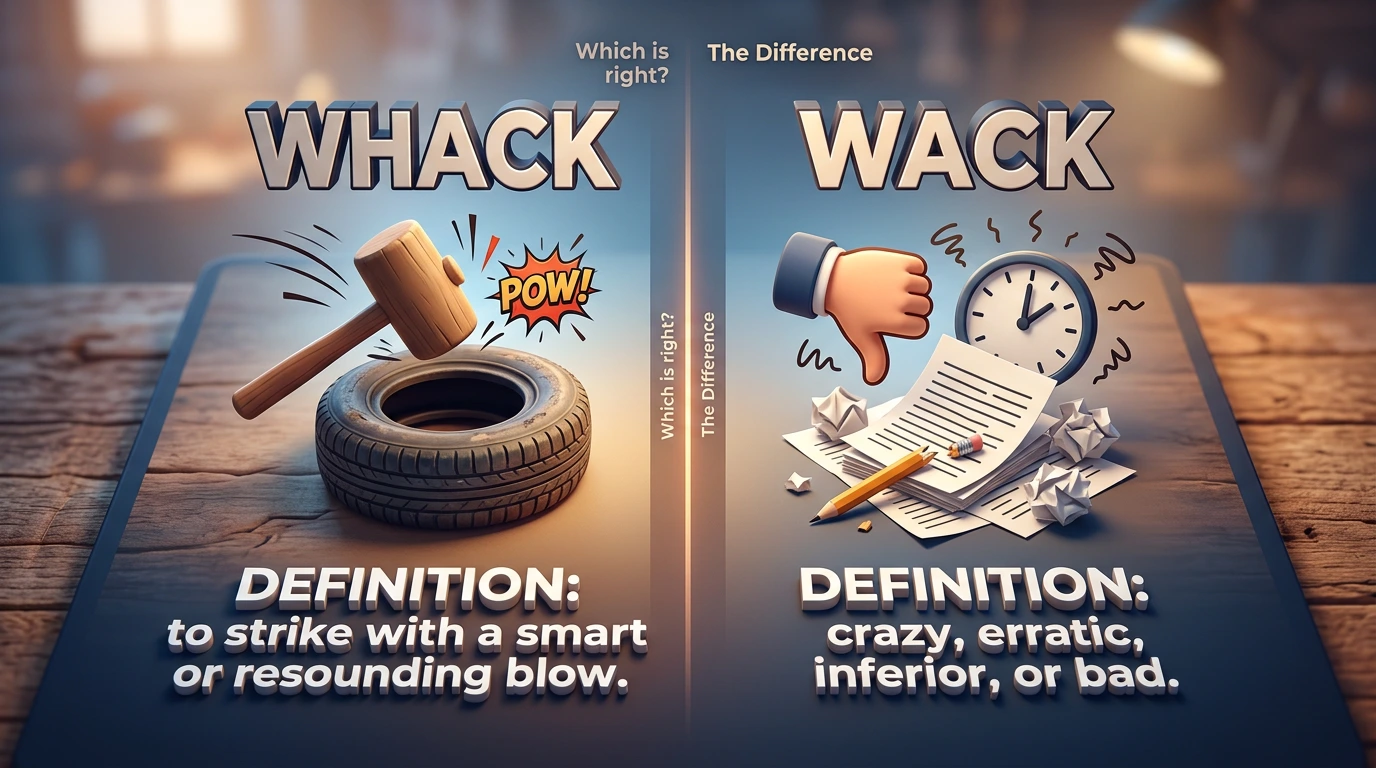
Whack and wack are both correct spellings, but whack means to hit forcefully, while wack is informal slang meaning bad, ...
Read more