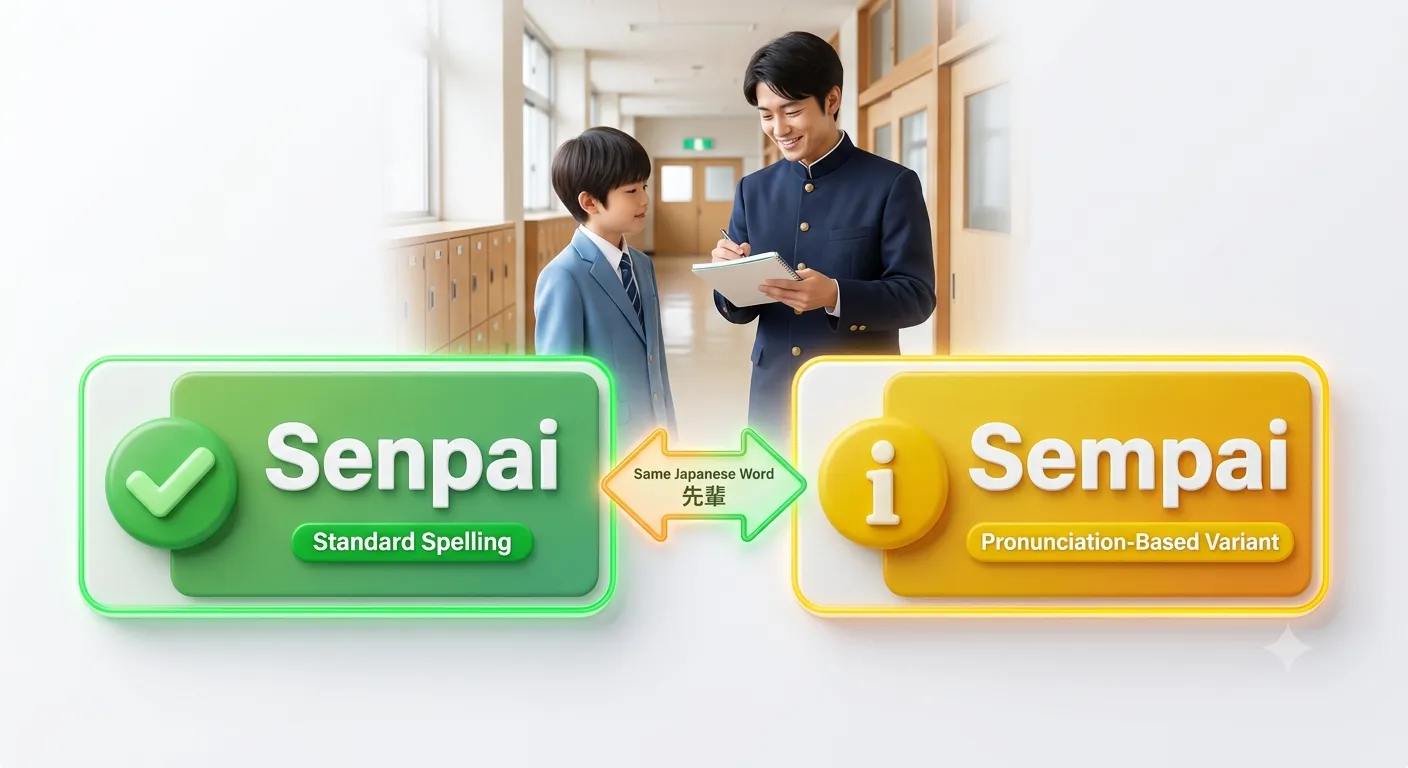
Senpai: A Japanese term for a senior or more experienced person who guides or mentors someone junior in the same school, workplace, or group. Sempai: A less common, pronunciation-based variant of senpai that refers to the same senior person but is not the standard spelling.
If you’ve watched anime, read manga, or studied Japanese, you’ve probably seen both senpai and sempai. They look similar, but are they both correct?
The short answer is yes. Both senpai and sempai represent the same Japanese word. However, senpai is the standard and most widely accepted spelling in English and modern Japanese romanization. Sempai is an alternative spelling that appears because of pronunciation changes in Japanese.
Let’s explore why both spellings exist and which one you should use.
Quick Answer
Senpai is the standard spelling used in dictionaries, textbooks, and official romanization systems.
Sempai is an alternative spelling based on pronunciation. It is understood but is much less common.
Best choice: Use senpai in almost every situation.
Quick Comparison Table
| Feature | Senpai | Sempai |
|---|---|---|
| Standard spelling | ✅ Yes | ❌ No |
| Correct meaning | ✅ Yes | ✅ Yes |
| Common in English | ✅ Very common | ⚠️ Rare |
| Found in anime communities | ✅ Yes | Occasionally |
| Used in Japanese education | ✅ Yes | Rare |
| Recommended for writing | ✅ Yes | Usually not |
What Does Senpai Mean?
Senpai (先輩) is a Japanese word for someone who has more experience, seniority, or a higher grade in a school, workplace, sports club, or organization.
A senpai often guides or mentors newer members, who are called kōhai (後輩).
Examples
- She asked her senpai for advice before the competition.
- The new employee learned from a senior senpai at work.
- In many anime series, younger students respectfully call older students senpai.
Why Do Some People Write Sempai?
The spelling sempai comes from the way the word is pronounced.
In Japanese, the n sound often changes slightly before the letter p. Instead of sounding like a clear n, it is pronounced more like an m.
That means senpai is commonly pronounced close to:
sem-pie
Some people write what they hear, producing sempai instead of senpai.
However, the official romanized spelling remains senpai.
The Origin of the Word
The word senpai (先輩) combines two Japanese characters:
- 先 (sen) = before, earlier, ahead
- 輩 (pai) = companion, colleague, group member
Together, the word refers to someone who came before you, making them your senior or experienced member within the same group.
Although many English speakers first encountered the word through anime and manga, it has long been part of everyday Japanese language and culture.
Why Is Senpai the Preferred Spelling?
Modern Japanese is commonly written in English using standardized romanization systems such as Hepburn romanization.
Under these systems:
- The word is written as senpai.
- The pronunciation may sound like sempai, but the spelling stays senpai.
This is similar to English words where pronunciation does not always match spelling exactly.
Therefore, dictionaries, language courses, and academic publications overwhelmingly prefer senpai.
Is Sempai Ever Wrong?
Not exactly.
People generally understand sempai, especially anime fans and online communities.
However, it is considered a non-standard spelling because it reflects pronunciation rather than the official romanized form.
If you’re writing an article, school assignment, blog post, or translation, senpai is the safer and more professional choice.
When Should You Use Each Spelling?
| Situation | Best Choice |
|---|---|
| School writing | Senpai |
| Japanese language learning | Senpai |
| Dictionary entries | Senpai |
| Academic writing | Senpai |
| Anime fan discussions | Mostly Senpai (Sempai is sometimes seen) |
| Casual jokes or memes | Either, but Senpai is preferred |
Is Senpai British or American English?
Unlike words such as colour/color or centre/center, senpai is not a British or American spelling difference. It is a Japanese loanword, so both British and American English use the same standard spelling.
| English Variety | Preferred Spelling |
|---|---|
| British English | Senpai |
| American English | Senpai |
| Canadian English | Senpai |
| Australian English | Senpai |
Key takeaway: There is no regional spelling difference. Senpai is the accepted form across English-speaking countries.
What Major Dictionaries and Language References Say
While not every English dictionary includes senpai, major Japanese language references and reliable dictionaries consistently use senpai as the standard romanization.
| Source | Preferred Spelling |
|---|---|
| Japanese dictionaries | Senpai |
| Hepburn Romanization | Senpai |
| Japanese language textbooks | Senpai |
| Academic publications | Senpai |
You may occasionally see sempai in fan translations or online forums, but it is generally treated as a pronunciation-based variant rather than the standard spelling.
Pronunciation Guide
Many English speakers wonder why senpai is sometimes pronounced like sempai.
Standard spelling
Senpai
Approximate pronunciation
SEM-pie
Why does the sound change?
In Japanese, the n sound often changes slightly before p, b, and m. This natural sound change makes senpai sound very close to sempai when spoken.
Remember:
- Spelling: Senpai ✅
- Pronunciation: Often sounds like sempai ✅
Common Mistakes
Here are some mistakes learners frequently make.
| Incorrect | Correct | Why? |
|---|---|---|
| Sempai is the official spelling. | Senpai is the official spelling. | Senpai follows standard romanization. |
| British English uses sempai. | Both use senpai. | There is no UK vs US difference. |
| Senpai and kōhai mean the same thing. | They describe opposite roles. | A senpai is senior; a kōhai is junior. |
| Sempai and senpai have different meanings. | They refer to the same Japanese word. | The difference is mainly spelling. |
Examples of Senpai in Sentences
- My senpai helped me prepare for the school festival.
- She has been my senpai since I joined the club.
- New employees often learn from an experienced senpai.
- The anime character respected her senpai greatly.
- Every first-year student was assigned a senpai mentor.
Examples of Sempai in Sentences
Although less common, you may still encounter sempai online.
- Some fans jokingly wrote, “Notice me, sempai!”
- The subtitle used sempai, although senpai is the standard spelling.
- Older fan websites sometimes spell the word sempai.
Tip: For professional or educational writing, choose senpai.
Senpai vs Sempai at a Glance
| Question | Answer |
|---|---|
| Are both spellings understood? | ✅ Yes |
| Which spelling is standard? | Senpai |
| Which spelling appears in dictionaries? | Senpai |
| Which spelling reflects pronunciation? | Sempai |
| Which should you use in writing? | Senpai |
Why Do Anime Fans Sometimes Use “Sempai”?
The popularity of sempai comes largely from internet culture.
Early fan translations, memes, and online communities sometimes spelled the word the way it sounded rather than following official romanization. As a result, sempai spread across forums, social media, and fan art.
Today, however, most official anime subtitles, manga translations, language-learning resources, and publishers use senpai.
Did You Know?
💡 Interesting fact: The famous internet phrase “Notice me, Senpai!” helped introduce the word senpai to millions of English speakers around the world. Despite countless memes, the standard spelling has always remained senpai.
Two Forms, One Word
Not every spelling debate has a winner and a loser sometimes English (or in this case, a borrowed Japanese word) just ends up with two accepted versions floating around. “Sempai” and “Senpai” are a good example: same meaning, same word, just a difference in how it’s been romanized over time. It’s the same story with Adviser or Advisor and Imposter or Impostor no strict rulebook, just two spellings that both earned their place.
Mini Quiz
Test your understanding by choosing the correct answer.
1. Which is the standard spelling?
- A. Sempai
- ✅ B. Senpai
2. Why does sempai sometimes appear?
- A. It is the British spelling.
- B. It has a different meaning.
- ✅ C. It reflects the way senpai is often pronounced.
3. Which spelling should you use in formal writing?
- A. Sempai
- ✅ B. Senpai
4. Which statement is correct?
- A. Senpai and sempai have different meanings.
- ✅ B. They represent the same Japanese word.
Score Guide
- 4/4: Excellent! You understand the difference perfectly.
- 2–3/4: Good job! Review the pronunciation section once more.
- 0–1/4: Read the article again to master this commonly confused spelling.
Practice Guide
Use senpai in the following situations:
| Situation | Correct Choice |
|---|---|
| Japanese language class | Senpai |
| School assignment | Senpai |
| Blog article | Senpai |
| Academic paper | Senpai |
| Dictionary entry | Senpai |
| Anime discussion | Senpai (preferred), sempai sometimes seen |
Quick Tip: If you’re unsure, choose senpai. It is the standard spelling recognized worldwide.
Frequently Asked Questions (FAQs)
Is sempai a real word?
Yes. Sempai is an alternative spelling based on pronunciation, but it is not the standard romanized form.
Which spelling should I use?
Use senpai in almost every situation, especially in formal, academic, and professional writing.
Do senpai and sempai have different meanings?
No. Both refer to a senior or more experienced person in a school, workplace, club, or organization.
Is sempai incorrect?
Not completely. It is understandable, but it is considered a non-standard spelling.
Why is senpai pronounced like “sempai”?
In Japanese, the n sound naturally changes before the letter p, making senpai sound close to sempai.
Is there a British and American spelling difference?
No. Both British and American English use senpai.
Grammar Relay Corner
Synonyms
Depending on the context, senpai may be similar to:
- Senior
- Mentor
- Guide
- Experienced member
- Upperclassman
- Veteran
- Leader
- Adviser
Note: These words are similar in meaning but do not fully capture the cultural role of a Japanese senpai.
Antonyms
- Kōhai (junior member)
- Beginner
- Novice
- Newcomer
- Junior
- Apprentice
Related Japanese Terms
| Word | Meaning |
|---|---|
| Kōhai | Junior member |
| Sensei | Teacher or instructor |
| Shishō | Master or expert teacher |
| Dōhai | Peer of the same seniority |
| Sempai | Alternative spelling of Senpai |
Idiom Connection
Learn from those who came before you.
This idea closely matches the role of a senpai, who guides and supports less experienced members.
Proverb
Experience is the best teacher.
A senpai often shares knowledge gained through experience, making this proverb a natural fit.
Key Takeaways
- ✅ Senpai is the official and standard spelling.
- ✅ Sempai is an alternative spelling based on pronunciation.
- ✅ Both words refer to the same Japanese concept.
- ✅ There is no British vs. American spelling difference.
- ✅ Dictionaries, textbooks, and language experts recommend senpai.
- ✅ Use senpai in formal, academic, and professional writing.
Conclusion
Although senpai and sempai refer to the same Japanese word, senpai is the standard spelling used in dictionaries, language textbooks, and official romanization systems. Sempai exists because the word is often pronounced with an m sound before p, but this pronunciation does not change the accepted spelling.
Whether you’re writing about anime, Japanese culture, or language learning, senpai is the spelling you should choose. It is accurate, widely recognized, and appropriate for both formal and informal contexts.

I’m Leo Jackson, an English writer with a soft spot for the peculiarities of language and spelling. I believe good spelling shouldn’t feel like guesswork, so I break down each comparison into clear, practical explanations anyone can use. Outside of writing, I’m usually buried in a novel or hunting down the next tricky word pair to demystify.