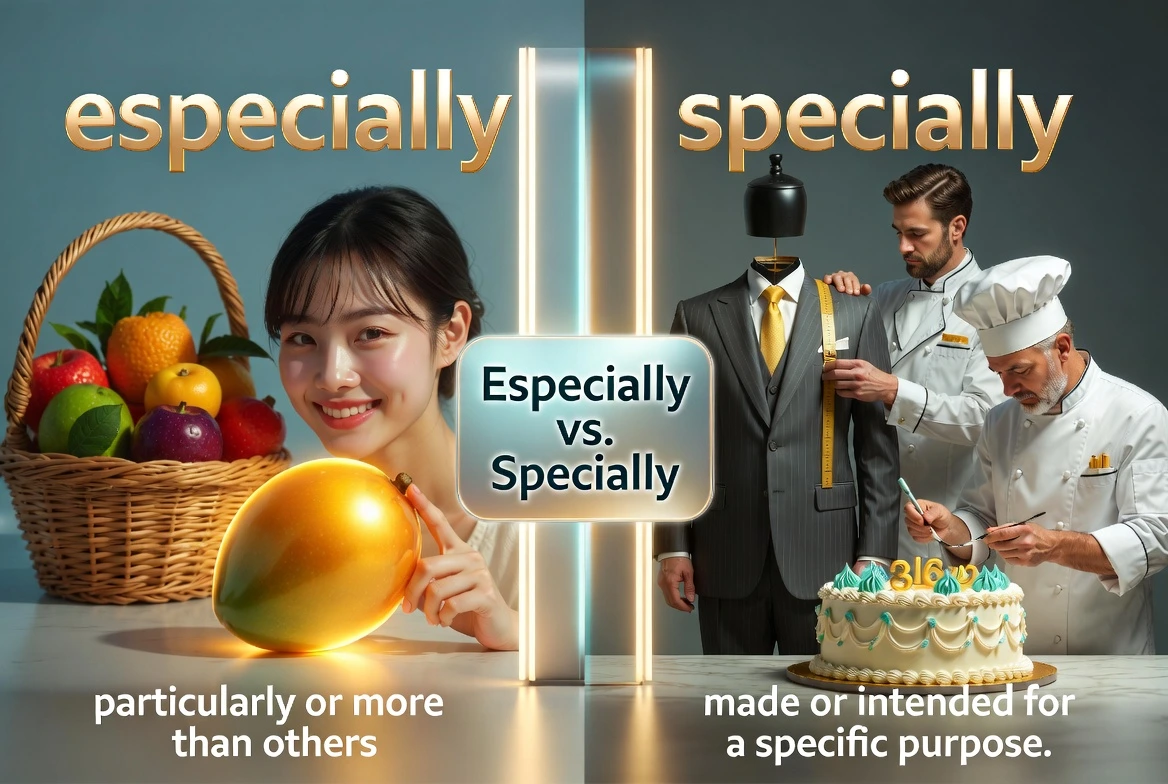
Especially means particularly or more than others, while specially means for a specific purpose or in a special way.
Quick Answer
Especially and specially are both adverbs, but they are not always interchangeable. Especially means particularly, above all, or more than others. Specially means for a specific purpose or in a particular way.
Examples:
- I love all fruits, especially mangoes. ✅
- This cake was made specially for your birthday. ✅
- The museum is especially busy during the summer. ✅
- These gloves are specially designed for firefighters. ✅
Quick Tip: Use especially to emphasize something. Use specially when something is made or done for a particular purpose.
What Is the Difference Between Especially and Specially?
Although especially and specially are closely related and sometimes overlap in meaning, they are used in different situations.
- Especially highlights one person, thing, or situation as being more important, more noticeable, or more significant than others.
- Specially describes something that is created, arranged, or intended for a specific purpose or person.
Compare these examples:
- ✅ I enjoy outdoor activities, especially hiking.
- ✅ This room was specially prepared for the guests.
- ✅ She loves animals, especially dogs.
- ✅ The software was specially developed for small businesses.
A simple way to remember the difference is:
Especially = Particularly
Specially = For a special purpose
What Does “Especially” Mean?
Especially is an adverb that means particularly, above all, or more than anything else. It is used to give extra emphasis to one person, thing, or situation.
Common Uses of Especially
1. To Emphasize One Thing More Than Others
Examples:
- I enjoy reading, especially mystery novels.
- She likes all flowers, especially roses.
- Children especially enjoy outdoor games.
- I love Italian food, especially pizza.
- Winter is beautiful, especially after snowfall.
2. To Mean “Particularly”
Examples:
- The road is especially dangerous at night.
- Thank you especially for your support.
- This lesson is especially useful for beginners.
- The weather is especially pleasant today.
- Exercise is especially important as you get older.
Common Expressions with “Especially”
- Especially important
- Especially useful
- Especially helpful
- Especially difficult
- Especially for
- Especially when
- Especially during
Tip: If you can replace the word with particularly, above all, or most of all, especially is usually the correct choice.
What Does “Specially” Mean?
Specially is an adverb that means for a particular purpose, specifically, or in a special manner. It is commonly used when something has been designed, prepared, or done for someone or something specific.
Common Uses of Specially
1. For a Specific Purpose
Examples:
- These shoes were specially designed for runners.
- The room was specially decorated for the wedding.
- This software was specially created for teachers.
- The meal was specially prepared for vegetarian guests.
- The equipment is specially made for underwater research.
2. In a Special Way
Examples:
- The artist specially selected each color.
- She wore a specially tailored dress.
- The gift was specially wrapped for the occasion.
- The machine was specially built to handle heavy loads.
- The event was specially organized to raise charity funds.
Common Expressions with “Specially”
- Specially designed
- Specially made
- Specially prepared
- Specially created
- Specially built
- Specially selected
- Specially trained
Tip: If something is made, designed, prepared, or intended for a specific purpose, specially is the better choice.
What Major Dictionaries Say
Major English dictionaries agree that especially and specially are closely related but differ in their most common uses.
Cambridge Dictionary
Cambridge Dictionary defines especially as particularly or more than others. It defines specially as for a particular purpose or in a special way.
Takeaway: Cambridge recommends especially for emphasis and specially for something created or intended for a specific purpose.
Merriam-Webster
Merriam-Webster defines especially as particularly or exceptionally. It defines specially as for a particular purpose or to a distinctive degree, while noting that the two words sometimes overlap in modern usage.
Takeaway: Merriam-Webster recognizes some overlap but maintains the traditional distinction between emphasis (especially) and specific purpose (specially).
Oxford English Dictionary
Oxford Dictionary defines especially as used to single out one person or thing above others. It defines specially as for a particular purpose or in a special manner.
Takeaway: Oxford distinguishes the words based on function: especially emphasizes, while specially indicates purpose.
Dictionary Consensus
Leading English dictionaries agree that:
- Especially means particularly, above all, or more than others.
- Specially means for a specific purpose or in a special way.
- Although the words occasionally overlap, using the traditional distinction makes your writing clearer and more precise.
Especially vs. Specially: Side-by-Side Comparison
| Feature | Especially | Specially |
|---|---|---|
| Part of Speech | Adverb | Adverb |
| Primary Meaning | Particularly; more than others | For a specific purpose; in a special way |
| Purpose | Adds emphasis | Shows intention or design |
| Common Contexts | Preferences, importance, emphasis | Design, preparation, customization |
| Can Mean “Particularly”? | ✅ Yes | ❌ Usually no |
| Can Mean “Made for a Purpose”? | ❌ No | ✅ Yes |
| Example | I love desserts, especially cheesecake. | This chair was specially designed for office use. |
Quick Rule: Use especially to emphasize something. Use specially when something is made, prepared, or intended for a specific purpose.
When to Use “Especially”
Use especially when you want to highlight one person, thing, or situation as being more important, more noticeable, or more significant than others.
Choose especially when you’re:
- Expressing a preference
- Giving extra emphasis
- Saying “particularly” or “above all”
- Highlighting one item in a group
Examples
- I enjoy all sports, especially football.
- This guide is especially helpful for beginners.
- She felt especially happy on her graduation day.
- Winter is especially beautiful in the mountains.
- Thank you especially for your kindness.
Common Phrases
- Especially important
- Especially useful
- Especially helpful
- Especially for beginners
- Especially during
- Especially when
- Especially if
Remember: If you can replace the word with particularly or above all, especially is the correct choice.
When to Use “Specially”
Use specially when something is made, designed, prepared, or intended for a particular person, purpose, or occasion.
Choose specially when you’re talking about:
- Custom-made products
- Special preparation
- Specific design
- Intended purpose
- Unique arrangements
Examples
- This software was specially developed for small businesses.
- The chef specially prepared a vegan meal.
- These boots are specially designed for hiking.
- The classroom was specially decorated for the celebration.
- She bought a specially made gift for her friend.
Common Phrases
- Specially designed
- Specially made
- Specially prepared
- Specially created
- Specially selected
- Specially trained
- Specially built
Remember: If something exists for a specific purpose, specially is usually the right word.
Read more: Among or Amongst: What’s the Difference? (With Examples)
Common Mistakes to Avoid
Although these words are sometimes used interchangeably in informal English, choosing the correct one makes your writing clearer and more professional.
| ❌ Incorrect | ✅ Correct | Why? |
|---|---|---|
| I love desserts, specially chocolate cake. | I love desserts, especially chocolate cake. | You’re emphasizing a favorite. |
| This laptop was especially designed for gamers. | This laptop was specially designed for gamers. | It was created for a specific purpose. |
| Thank you specially for your support. | Thank you especially for your support. | You’re giving special emphasis. |
| These glasses were especially made for swimmers. | These glasses were specially made for swimmers. | They were made for a particular use. |
| I enjoy traveling, specially in spring. | I enjoy traveling, especially in spring. | You’re highlighting one season. |
Commonly Confused Expressions
| ❌ Wrong | ✅ Right |
|---|---|
| Especially designed | Specially designed |
| Especially made | Specially made |
| Especially prepared | Specially prepared |
| Specially important | Especially important |
| Specially helpful | Especially helpful |
| Specially beautiful | Especially beautiful |
Tip: If you’re emphasizing one thing over others, use especially. If you’re describing purpose or design, use specially.
Memory Trick to Remember the Difference
Here’s an easy way to keep these two words straight.
Think of This Rule
- Especially = Emphasis
- Specially = Specific Purpose
Easy Memory Tip
Notice that specially starts with special-, which can remind you of special purpose or special design.
For example:
- Specially designed
- Specially made
- Specially prepared
On the other hand, especially often means particularly or more than anything else.
Remember This Phrase
Especially = Particularly.
Specially = Specifically made.
If you can replace the word with particularly, choose especially. If you can replace it with specifically, choose specially.
Examples of Especially and Specially in Sentences
Seeing both words in context makes the difference much easier to understand.
Examples with Especially
- I enjoy reading, especially mystery novels.
- This lesson is especially useful for beginners.
- She loves all animals, especially dogs.
- The park is especially beautiful in autumn.
- Exercise is especially important for good health.
Examples with Specially
- The cake was specially baked for the wedding.
- These gloves are specially designed for firefighters.
- The room was specially decorated for the party.
- The software was specially developed for teachers.
- She ordered a specially made dress for the event.
Especially vs. Specially in Context
- ✅ I enjoy all desserts, especially cheesecake.
- ✅ This wheelchair was specially designed for children.
- ✅ Thank you especially for your encouragement.
- ✅ The meal was specially prepared for the guests.
These examples show that especially emphasizes one thing over others, while specially describes something created or done for a particular purpose.
Read more: Pass or Past: What’s the Difference? (With Examples)
Practice Quiz
Choose the correct word: especially or specially.
1. I enjoy all kinds of music, ______ classical music.
- A) especially
- B) specially
✅ Answer: A) especially
2. This jacket was ______ designed for extreme weather.
- A) especially
- B) specially
✅ Answer: B) special
3. Thank you ______ for helping me during the project.
- A) especially
- B) specially
✅ Answer: A) especially
4. The chef ______ prepared a gluten-free meal for the guest.
- A) especially
- B) specially
✅ Answer: B) specially
5. Children are ______ excited during the holiday season.
- A) especially
- B) specially
✅ Answer: A) especially
6. These safety helmets are ______ made for construction workers.
- A) especially
- B) specially
✅ Answer: B) specially
Grammar Relay
📚 Vocabulary Corner
Synonyms of Especially
- Particularly
- Notably
- Exceptionally
Synonyms of Specially
- Specifically
- Expressly
- Uniquely
Antonyms
Especially
- Generally
- Equally
- Ordinarily
Specially
- Generally
- Normally
- Commonly
Idioms Related to Specialness
1. Stand out from the crowd
Meaning: To be noticeably better or different than others.
Example: Her creativity helped her stand out from the crowd.
2. Above and beyond
Meaning: To do more than what is expected.
Example: The staff went above and beyond to make the event successful.
3. A cut above
Meaning: Better in quality than others.
Example: This restaurant is a cut above the rest.
Proverb
“Little things mean a lot.”
Meaning: Small acts of kindness or thoughtful details can make a big difference, especially when done with care.
💡 Grammar Tip of the Day
Although especially and specially are closely related, they answer different questions.
- Use especially when you mean particularly, more than others, or above all.
- Use specially when something is made, designed, or intended for a particular purpose.
Easy Formula
✅ Especially = Particularly
- I like all fruits, especially mangoes.
✅ Specially = Specifically made
- This wheelchair was specially designed for children.
Remember: If you can replace the word with particularly, use especially. If you can replace it with specifically, use specially.
🚀 Next Lesson
Continue improving your grammar with these commonly confused word guides:
- Pass or Past: What’s the Difference?
- Patient or Patience: What’s the Difference?
- Losing or Loosing: Which Word Is Correct?
Frequently Asked Questions (FAQs)
Q: What is the difference between especially and specially?
Especially means particularly or more than others, while specially means for a specific purpose or in a special way.
Q: Can especially and specially be used interchangeably?
Sometimes they overlap in informal English, but they usually have different meanings. For clear and accurate writing, use especially for emphasis and specially for purpose.
Q: Which is correct: “especially designed” or “specially designed”?
Specially designed is generally the preferred expression because it means designed for a particular purpose.
Example:
✅ These shoes are specially designed for hiking.
Q: Is it “especially for you” or “specially for you”?
Both can be correct, depending on the meaning:
- Especially for you = particularly for you, more than for anyone else.
- Specially for you = made or prepared specifically for you.
Q: How can I remember the difference between especially and specially?
Use this simple rule:
Especially = Particularly.
Specially = Specifically made.
If you can replace the word with particularly, choose especially. If you can replace it with specifically, choose specially.
Key Takeaways
- Especially means particularly, above all, or more than others.
- Specially means for a specific purpose or in a special way.
- Use especially to emphasize one person, thing, or situation.
- Use specially when something is made, designed, or prepared for a particular purpose.
- Remember: Especially = Particularly. Specially = Specifically made.
Final Verdict
Although especially and specially are closely related, they are not always interchangeable. Especially is the better choice when emphasizing one thing over others, while specially is used when something is created, prepared, or intended for a specific purpose.
To avoid confusion, remember this simple rule:
Especially = Particularly.
Specially = Specifically made.
Once you understand this distinction, you’ll be able to use both words naturally and confidently in everyday English.
Read more: Losing or Loosing: Which Word Is Correct? (2026)

I am Calara Stephen passionate about making English simple and easy to understand through clear spelling comparisons, grammar guides, and language tips. Through thoughtful, reliable content, I aim to be a trusted guide for anyone looking to improve their English.